Illustration of the Gardevils, guardians of the Meyboom tree

Brussels folklore

The Meyboom

Every 9 August since 1308, Brussels plants its "tree of joy". At Le Saint d'Hic III, the Gardevils have their meeting place.

UNESCO

The Meyboom has been listed since 2008 on UNESCO's Representative List of the Intangible Cultural Heritage of Humanity, among the processional giants and dragons of Belgium and France.

History

The tree of victory

The planting of the Meyboom is the oldest Brussels tradition, recorded since 1308. According to legend, it all began in 1213: people from Leuven attacked a tavern outside the walls of Brussels, Het Cattenhuys, where a wedding was being celebrated — a quarrel born of a tax on beer. The Companions of Saint Lawrence, a city guild, came to the guests' rescue and drove off the attackers.

In gratitude, Duke Henry I of Brabant granted the guild the right to plant a "tree of joy" — the Meyboom — every year. The date was set for 9 August, the eve of Saint Lawrence's day.

The ceremony

9 August, before 5pm

Every 9 August, a leafy beech tree weighing at least 600 kg and 12 to 13 metres tall is chosen in the Sonian Forest. The Bûûmdroegers — the tree bearers — carry it through Schaerbeek, Saint-Josse and Brussels. The procession, with its giants carried by the Poepedroegers, its brass band and its Wheel of Fortune, passes through the Grand-Place before reaching the corner of Rue des Sables and Rue du Marais.

The tree must be planted there before 5pm, or else the honour passes to the people of Leuven — who have indeed tried to steal it, notably in 1939 and 1974. Along the way, branches from the tree are handed out: they are said to bring good luck for the whole year.

The guardians

The Gardevils

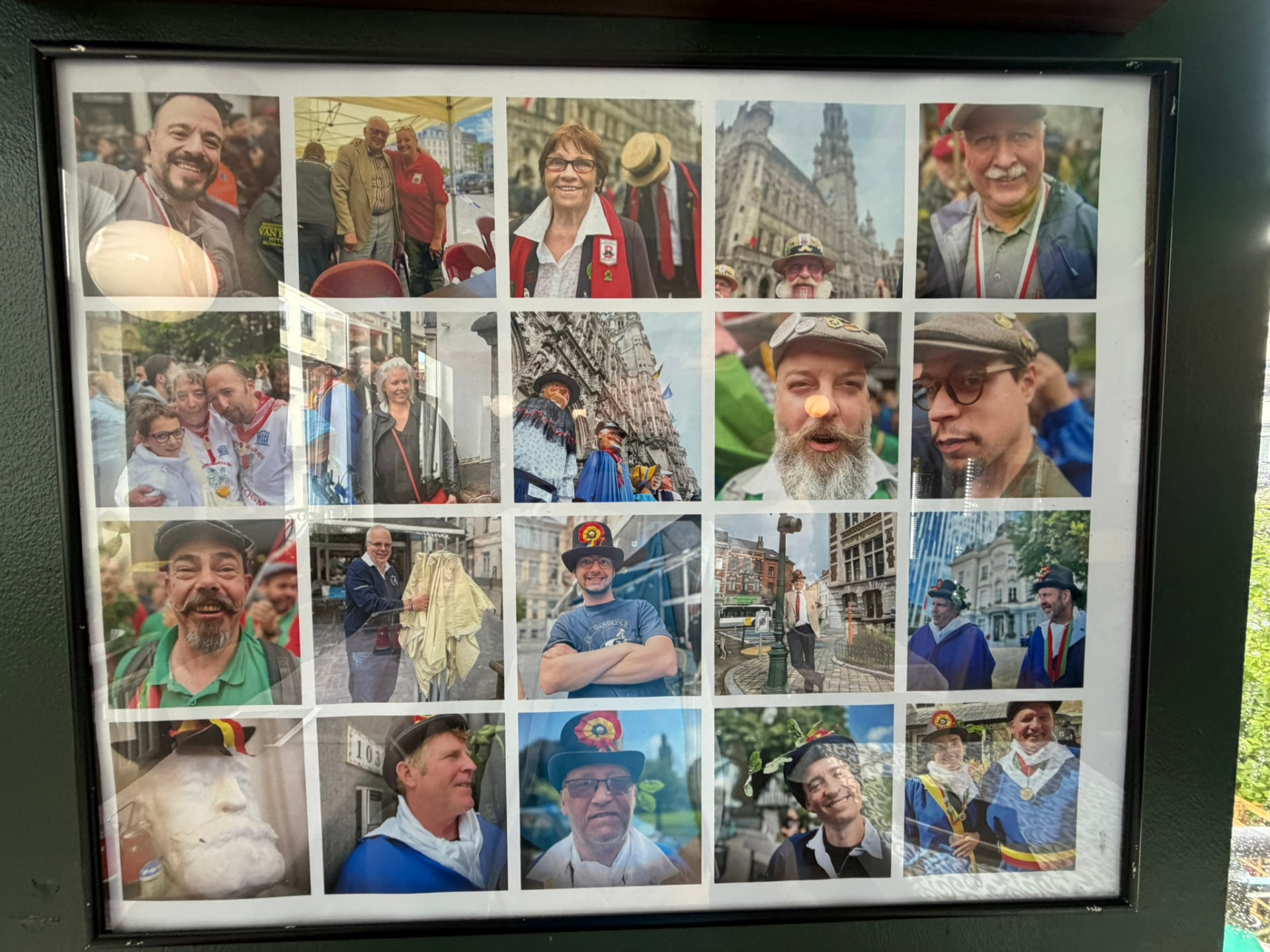
Since 2001, the Gardevils have officially accompanied the procession. Dressed in their blue costume, top hat and medal, they watch over this centuries-old tradition. Le Saint d'Hic III is their meeting place: photos, mementos and illustrations of the guardians decorate our walls.

Next edition

9 August 2027

The next Meyboom planting will take place on 9 August 2027. Join us at Le Saint d'Hic III to experience this Brussels moment in a brasserie atmosphere, with beers, homemade dishes and good company.
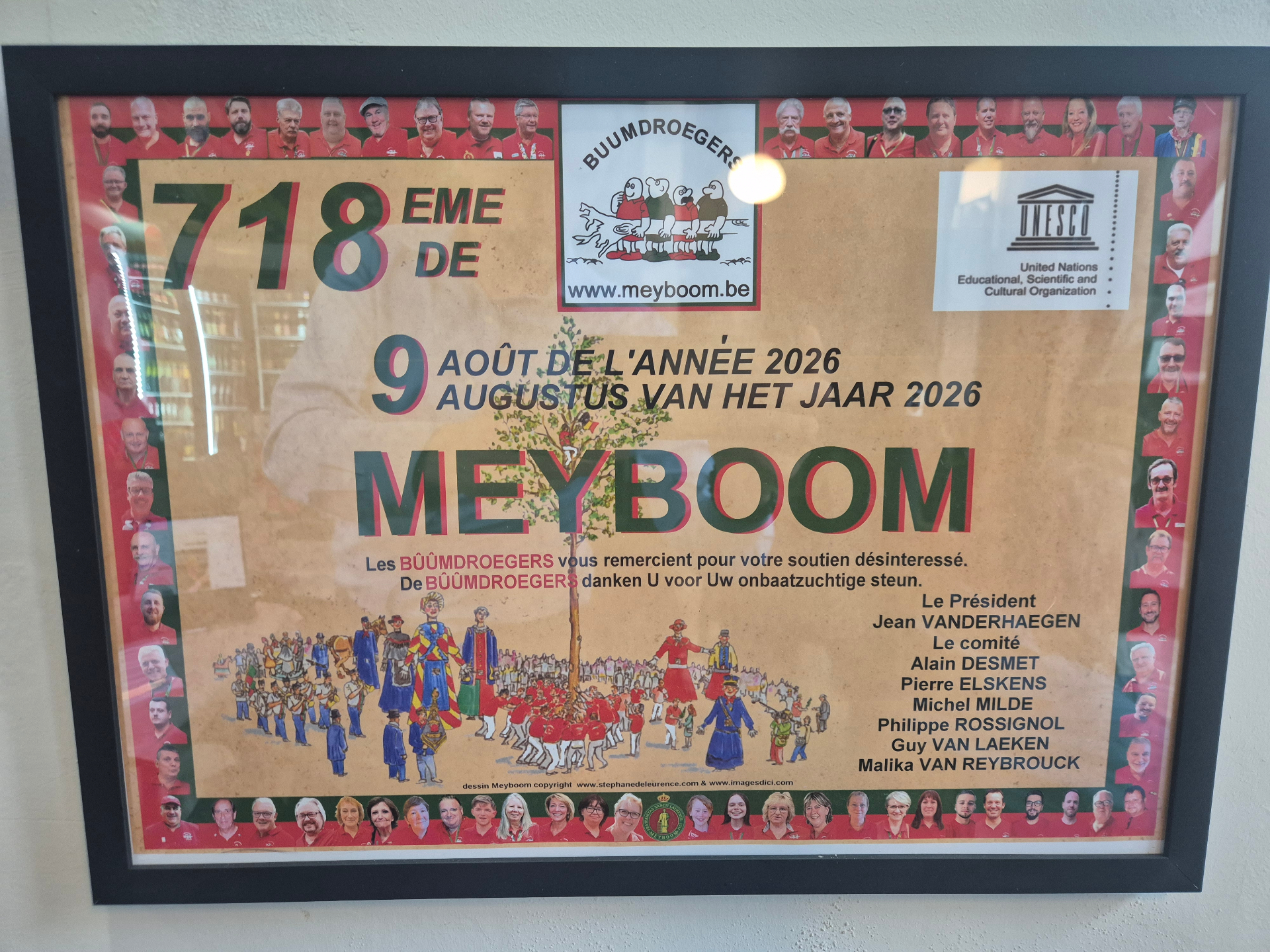
Framed poster of the 718th Meyboom of 9 August 2026, a gift from the Bûûmdroegers
The official poster of the 718th Meyboom (9 August 2026) from the Bûûmdroegers, framed in the dining room of Le Saint d'Hic III.
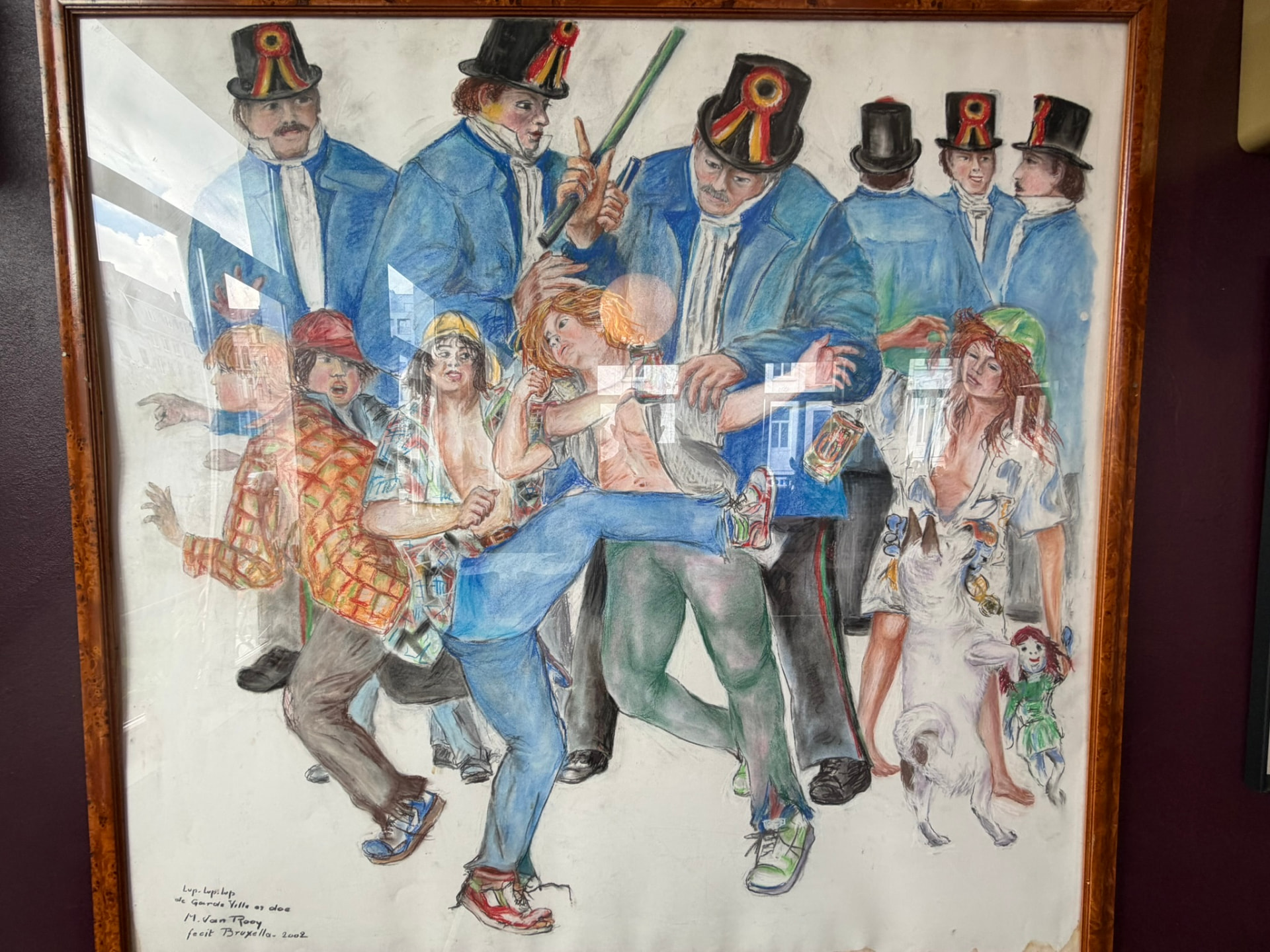
Illustration of the Gardevils, guardians of the Meyboom tree
Illustration of Meyboom folklore displayed at Le Saint d'Hic III.
Photos of Gardevils members in blue costume
Another photo frame of the Gardevils
Upstairs room of Le Saint d'Hic III, decorated in Meyboom colours
The private upstairs floor, ideal for an event around the Meyboom.

Key dates

Seven centuries of Meyboom

  1. 1213

    The beer quarrel: the Companions of Saint Lawrence drive off the Leuven attackers assailing the Het Cattenhuys tavern. The Duke of Brabant grants them the right to plant a tree of joy.

  2. 1308

    First recorded planting of the Meyboom, at the corner of Rue des Sables and Rue du Marais.

  3. 1831

    Money is scarce after Belgian independence: the women of the neighbourhood take the initiative and ensure the planting goes ahead.

  4. 1939

    People from Leuven steal the tree and plant it in Leuven — but the Brussels residents had planted another tree in time. The quarrel over the "real" Meyboom has continued ever since.

  5. 1974

    Another attempt by the people of Leuven, disguised as journalists: since then, both cities have each claimed the "real" Meyboom.

  6. 2001

    The Gardevils officially join the Meyboom procession.

  7. 2008

    The Meyboom is inscribed by UNESCO on the Representative List of the Intangible Cultural Heritage of Humanity.

  8. 2026

    718th planting: the official Bûûmdroegers poster is framed in the dining room of Le Saint d'Hic III.